
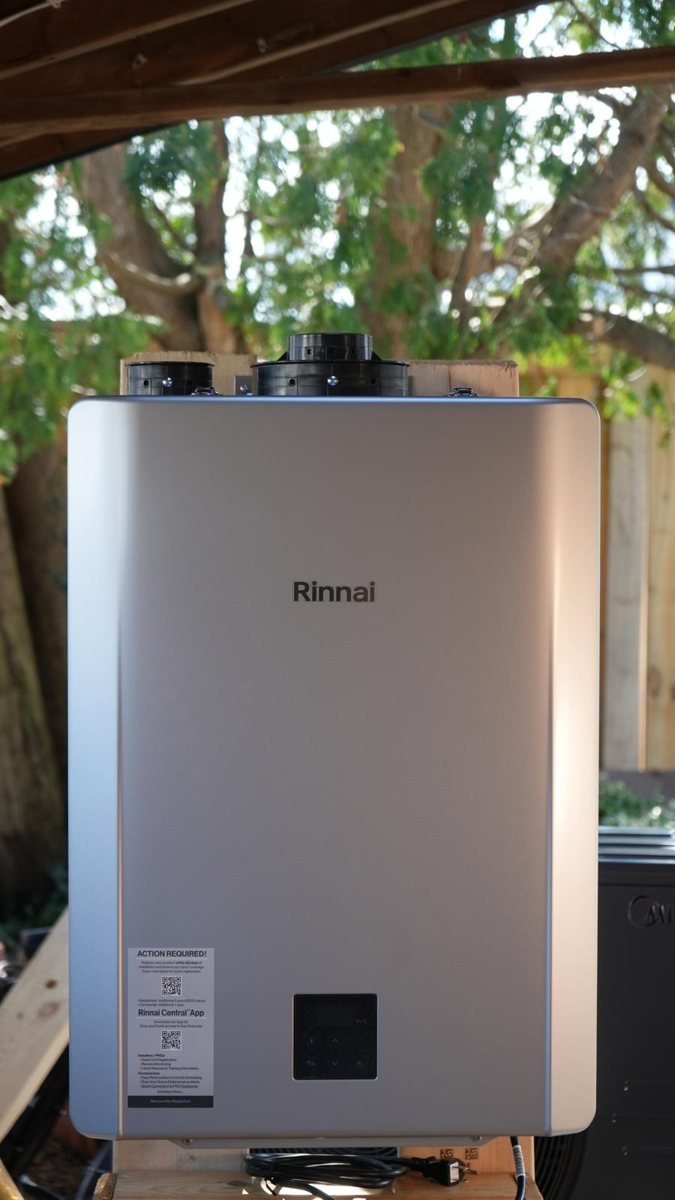
A tankless water heater can solve a familiar household problem: someone starts the shower just as the dishwasher is running, and the hot water suddenly turns lukewarm. But the best tankless water heater features are not simply about having an endless supply of hot water. They determine whether the system can keep up with your home, manage winter groundwater temperatures, and operate efficiently for years.
For homeowners, the right unit should feel simple. You turn on a faucet, shower, or appliance and get consistent hot water without waiting on a storage tank to recover. Getting that result, however, depends on correct sizing, professional venting, and features that match the way your family actually uses water.
Best Tankless Water Heater Features That Matter Most
Enough flow rate for real household demand
Flow rate is the first number to look at. It is measured in gallons per minute, or GPM, and shows how much hot water a unit can produce at one time. A tankless system may work beautifully for one shower, yet struggle if two showers, a washing machine, and a kitchen faucet run together.
Do not choose based on the number of bathrooms alone. Consider how many fixtures are likely to operate at the same time and what appliances use hot water. A smaller household may be well served by a lower-capacity model, while a busy family home often needs a higher-output unit or, in some cases, two properly designed units.
In colder climates, incoming water starts at a lower temperature for much of the year. That means the heater has to work harder to reach your desired shower temperature. A unit’s advertised GPM can drop when it must deliver a larger temperature rise. This is why a professional load assessment is more useful than choosing the highest GPM number on a box.
A high uniform energy factor
Efficiency affects operating costs, especially in homes with steady hot-water use. Look for a high Uniform Energy Factor, or UEF. In general, a higher number means more of the fuel or electricity used by the system becomes hot water rather than wasted energy.
Tankless technology avoids the standby losses of a conventional tank, which keeps stored water warm around the clock. Still, the most efficient choice depends on your fuel source, gas line capacity, household demand, and installation conditions. A high-efficiency unit is worthwhile only when it is sized and installed correctly.
Condensing technology for stronger efficiency
Many premium gas tankless water heaters use condensing technology. These models capture additional heat from exhaust gases before venting them outdoors, allowing them to achieve higher efficiency than non-condensing equipment.
There is a trade-off. Condensing units typically require condensate drainage and may have different venting requirements. Those details should never be treated as an afterthought. A clean, code-compliant installation protects performance, safety, and manufacturer warranty coverage.
Precise temperature control
Good temperature control is one of the tankless water heater features homeowners notice every day. Look for a unit with a clear digital controller and small temperature adjustment increments. This helps you set a comfortable, safe water temperature rather than constantly adjusting the shower handle.
Advanced models also use electronic sensors and modulating burners to respond to changing water demand. When someone opens another faucet, the unit can adjust its output instead of allowing a sharp temperature swing. That is especially valuable in households where multiple people use hot water during the morning rush.
Low minimum activation flow
Tankless units need a certain amount of water flow before they activate. If that minimum is too high, you may not get hot water at a lightly running bathroom faucet or a low-flow fixture.
A lower activation threshold can improve day-to-day comfort and reduce the annoyance of waiting for water to heat at small fixtures. It is a practical feature that is easy to overlook when comparing larger performance numbers.
Built-in freeze protection
Freeze protection deserves serious attention for equipment installed in garages, utility rooms, exterior closets, or other areas exposed to cold conditions. Many units include internal protection that helps prevent damage when temperatures drop.
This feature has limits. It does not replace proper installation, insulated water lines, reliable electrical power, or an appropriate location. If a winter outage occurs, even a protected unit can be at risk in an unconditioned space. Your installer should assess the location before recommending equipment.
Features That Protect Long-Term Performance
Scale detection and maintenance alerts
Hard water minerals can build up inside a tankless heat exchanger. Over time, scale reduces heat transfer, lowers efficiency, and can shorten the life of the equipment. In many homes, periodic flushing is part of responsible tankless water heater maintenance.
Some models offer service reminders, diagnostic codes, or scale-monitoring features. These tools do not eliminate maintenance, but they make it easier to address problems before performance declines. If your home has hard water, it may also be worth discussing a water treatment solution as part of the overall installation plan.
Recirculation capability
Recirculation is a major convenience feature for larger homes or layouts where bathrooms sit far from the water heater. Instead of waiting while cooled water travels out of the pipes, a recirculation system can move hot water closer to the fixtures when needed.
Some tankless models have an internal recirculation pump. Others can work with an external pump. The best option depends on whether your home has a dedicated return line, how far fixtures are from the heater, and how much water-saving convenience matters to you.
Recirculation is not automatically the right choice for every home. Continuous recirculation can use more energy, so look for smart scheduling, timers, motion sensors, or demand-based controls. These options deliver faster hot water without operating the pump unnecessarily.
Smart diagnostics and remote monitoring
Wi-Fi connectivity and mobile alerts can be helpful, particularly for landlords, busy homeowners, and small commercial properties. Depending on the model, remote monitoring may flag error codes, maintenance needs, or unusual operating conditions.
Smart features should support reliability, not distract from it. A dependable heat exchanger, proper venting, adequate gas supply, and professional service matter more than an app. Still, early alerts can help prevent a minor issue from becoming a no-hot-water emergency.
Strong warranty coverage and accessible service
A tankless water heater is a long-term home investment. Compare warranty terms for the heat exchanger, parts, and labor separately. Heat exchanger coverage is often longer, but the details matter, including whether regular maintenance and professional installation are required.
Also consider who will service the equipment after installation. The most feature-rich model is not a good value if qualified support, replacement parts, or maintenance are hard to access. Choose a system backed by an experienced installer who can explain the warranty and provide ongoing service when needed.
Installation Features Are Just as Important as Product Features
A tankless water heater does not operate independently of the home around it. Gas models may need a larger gas line, new venting, a condensate drain, and electrical power for controls. Electric models can require significant electrical capacity and may not be practical for every whole-home application.
Before replacing a tank water heater with tankless equipment, have the existing gas supply, electrical panel, venting path, water quality, and installation location inspected. This is where surprises and avoidable costs often appear. A clear estimate should explain the equipment recommended, the installation work included, and any upgrades needed for safe operation.
For homeowners in Toronto and the GTA, local winter conditions make correct sizing particularly important. A2Z Comfort Solutions can assess your home’s hot-water demand and installation requirements, then recommend a system built for reliable everyday performance rather than just an impressive specification sheet.
Choose Comfort Over a Feature Checklist
The right tankless water heater should provide steady hot water when your household needs it, use energy wisely, and remain straightforward to maintain. Features such as high flow capacity, condensing efficiency, low-flow activation, freeze protection, recirculation, and diagnostics all have value, but not every home needs every upgrade.
Start with your busiest hour of water use, your home’s layout, and the condition of your existing utilities. A properly matched and professionally installed unit will do more for your comfort than a long list of features you may never use.